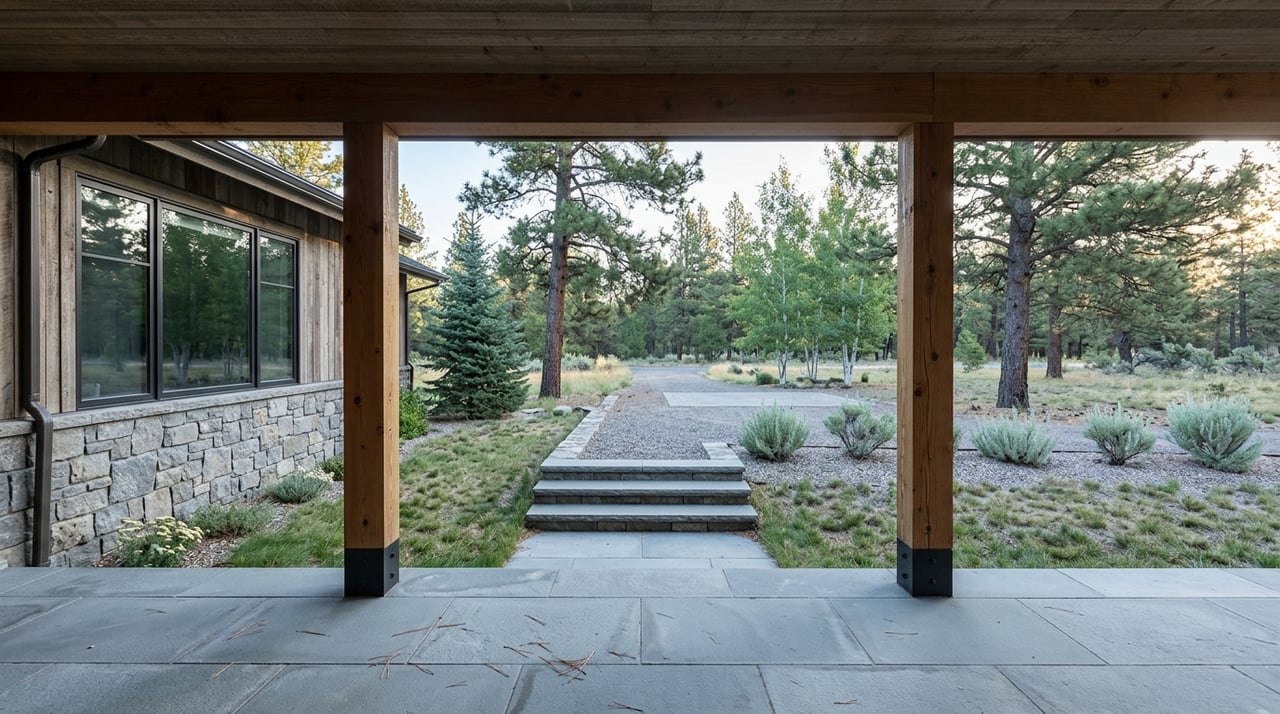
What does daily life look like when you live just west of Jackson, but want a setting that feels a little quieter and more rooted in the landscape? For many buyers, that is the real appeal of Wilson. You get a small community with a strong residential identity, close access to trails and local services, and an everyday rhythm shaped by both convenience and the seasons. Let’s take a closer look.
Wilson feels local by design
Wilson is not framed as a resort district in county planning materials. Instead, Teton County describes it as a small, complete neighborhood and county node intended to support town-level living, with housing, convenience commercial uses, recreation, transit, and basic services close at hand, while Jackson remains the region’s larger civic and retail center. County planning documents make that distinction clear.
That planning vision matters because it helps explain why Wilson often feels lived-in rather than visitor-oriented. The same workshop materials cite a long-standing pattern of parks, a community center, an elementary school, childcare, neighborhood retail, offices, medical services, and eateries within walking distance. In practical terms, that supports a daily routine built around nearby errands and familiar places instead of resort-scale activity.
Teton County’s District 11 guidance for Wilson reinforces that identity. The emphasis is on infill, workforce housing, a town-style pattern of detached homes and duplexes, pedestrian access, and protection of riparian corridors, all of which point to a neighborhood with a strong local center.
Everyday errands stay close
One of Wilson’s quiet strengths is that many day-to-day needs can stay close to home. Based on county planning materials, the area has long been intended to support local services within walking distance, including neighborhood retail, dining, offices, and medical services. That creates a different feel from places designed mainly around short-term visitors.
If you value a simple morning routine, Wilson can offer that sense of ease. The setting supports the idea of grabbing coffee, making a short errand run, or heading out for a walk without immediately shifting into the busier pace of Jackson. For many residents, that local rhythm is part of what makes the area so appealing.
At the same time, Wilson stays connected to the broader valley. Jackson remains the area’s larger center for retail, professional services, and civic functions, so living in Wilson is less about isolation and more about balancing access with a quieter home base.
Schools connect Wilson to the valley
For households thinking about day-to-day logistics, school patterns are part of the picture. According to Teton County School District attendance areas, Wilson Elementary serves Highway 22 west of Coyote Canyon Road to the Wyoming-Idaho border, along with Highway 390 to Moose.
Middle- and high-school students in Teton County attend Jackson Hole Middle School, Jackson Hole High School, and Summit Innovations. That means younger students may have a neighborhood school nearby, while older students are tied into the wider valley school system. For many families, that creates a routine that combines local living with broader daily movement around Jackson Hole.
This pattern also reflects Wilson’s place in the region. It functions as a distinct community west of Jackson, but it remains closely linked to the valley’s shared services and institutions.
Commuting requires flexibility
Wilson offers close proximity to Jackson, but everyday travel comes with a practical Mountain West reality: conditions can change quickly, especially in winter. For west-of-Jackson residents, checking road and weather conditions is often a normal part of the day.
The official source for travel updates is WYDOT’s 511 system, which provides information on advisories, road conditions, and temporary or seasonal closures over Teton Pass. If you live in Wilson and travel regularly, weather awareness becomes part of your routine rather than an occasional extra step.
Transit is also part of the local equation. The START Teton Valley Commuter serves Jackson, Wilson/Nora’s Village Road Transit Center, Victor, and Driggs on weekdays, with published stops including Wilson/Hungry Jack’s and Wilson/Nora’s Village Road Transit Center.
According to START fare information, most riders pay $3 one way for the Wilson-to-Jackson trip, and Teton County students in grade 12 and under ride free on Wilson and Hoback services. START also outlines weather-related procedures for Teton Pass closures, including holds, reroutes, or cancellations when conditions are unsafe. That is a useful reminder that commuting here is tied to the landscape and the season.
Trails are part of the routine
Wilson’s location near major trail access is one of its clearest lifestyle advantages. The Teton Pass Trailhead on Highway 22 out of Wilson is a main access point for Black Canyon and History trails, and in winter it is used for backcountry skiing on Mt. Glory. The Forest Service also notes that it can accommodate trailers and horseback riders.
Just outside Wilson, Trail Creek Trailhead connects to Old Pass Road and to horse-and-hike routes. Together, these trailheads support the sense that outdoor access is not a special event here. It can be part of an ordinary weekday or a quick outing close to home.
That matters for buyers who want more than scenic surroundings. In Wilson, the outdoors is woven into the neighborhood experience, whether that means hiking, skiing, or equestrian access within a short drive.
Owen Bircher Park adds year-round use
At the neighborhood level, Owen Bircher Park adds another layer to everyday life in Wilson. On Main Street, the park includes a riding arena used by local equestrians during the warmer months.
The county notes that the horse arena is generally open from mid-May through the end of September for riding. In winter, that same space is converted into an ice-skating and ice-hockey rink. It is a simple example of how Wilson’s amenities shift with the season while staying rooted in community use.
That kind of flexible, year-round function fits the area well. Wilson is quiet, but it is not inactive. The pace just changes as the calendar turns.
The landscape shapes daily experience
In Wilson, the natural setting is not just a backdrop. It influences how people move through the area each day. Teton County notes that the Wilson-Stilson Pathway and WY22 cross the Snake River riparian corridor and critical wildlife habitat, and the county has tested a wildlife guard in the area to help reduce wildlife-vehicle conflicts. You can see that context in the county’s wildlife guard information.
That connection to the landscape is part of what makes Wilson feel distinct. Everyday driving, walking, and recreation all happen in close relationship to the river corridor, habitat patterns, and changing seasonal conditions.
For many people, that is part of the draw. Wilson offers a residential setting where the valley’s natural systems still feel close and visible in daily life.
Seasons define the pace
Wilson has a clear seasonal rhythm, and that rhythm shapes everything from recreation to daily planning. Teton County’s parks and shelters information shows that park reservations run from May 1 through September 30, with winter beginning October 1, when restrooms and water fountains are winterized.
The Wilson boat ramp, located off Moose Wilson Road next to R Park, is open from May 1 through October 31, weather permitting. Summer tends to support boating, riding, hiking, and general park use, while winter brings a shift toward skating, hockey, skiing, and closer attention to road conditions.
This is one of the practical realities of living west of Jackson. Wilson stays quiet and residential across the year, but the experience is never static. Snow conditions, trail access, and travel patterns all influence the daily tempo.
Wilson is still evolving
Even with its established identity, Wilson continues to improve its neighborhood core. Teton County’s current road construction update for downtown Wilson says multimodal improvements will add pathways on both sides of WY22 and expand the roadway to a three-lane cross section to improve pedestrian and cyclist safety as well as traffic flow.
That investment suggests a long-term commitment to making Wilson more walkable and bike-friendly while supporting everyday use. It fits with the broader planning vision of a compact, connected neighborhood rather than a destination-scale commercial strip.
For buyers considering the area, that is worth noting. Wilson’s appeal is not only about what it is today, but also about how carefully its core is being shaped for local life.
Why Wilson stands out
If you are drawn to Jackson Hole but want a home base with a quieter cadence, Wilson offers a compelling balance. It is close to Jackson, connected to trails, tied into valley schools and transit, and shaped by a planning vision that prioritizes local living and neighborhood services.
Its appeal is subtle, which is often exactly the point. Wilson is not about constant activity or destination energy. It is about a more grounded kind of daily life, where errands stay close, the landscape stays present, and each season brings its own rhythm.
If you are exploring Wilson or thinking about how west-of-Jackson living fits your goals, Graham Faupel Mendenhall & Associates can help you navigate the nuances of the valley with local insight and a thoughtful, tailored approach.
FAQs
What makes Wilson different from resort areas near Jackson?
- Wilson is described in county planning documents as a small, complete neighborhood meant for town-level living, with local services, housing, recreation, and transit rather than destination-scale resort use.
What schools serve students who live in Wilson?
- According to Teton County School District attendance areas, Wilson Elementary serves the local west-of-Jackson area, while Jackson Hole Middle School, Jackson Hole High School, and Summit Innovations serve Teton County middle- and high-school students.
What is the commute like from Wilson to Jackson?
- The commute is relatively close, but winter weather and Teton Pass conditions can affect travel, so many residents rely on regular checks of WYDOT 511 and may also use START commuter service.
What transit options are available in Wilson?
- START’s Teton Valley Commuter provides weekday service connecting Jackson, Wilson, Victor, and Driggs, with stops in Wilson including Hungry Jack’s and Nora’s Village Road Transit Center.
What outdoor access does Wilson offer?
- Wilson sits close to Teton Pass Trailhead and Trail Creek Trailhead, which support hiking, horseback riding, and seasonal backcountry ski access.
How does Wilson change with the seasons?
- Summer often centers on hiking, riding, boating, and park use, while winter shifts toward skating, hockey, skiing, and closer attention to weather and road conditions.
Is Wilson becoming more walkable?
- Yes. Teton County says downtown Wilson multimodal improvements are planned to add pathways on both sides of WY22 and improve pedestrian, cyclist, and traffic conditions.