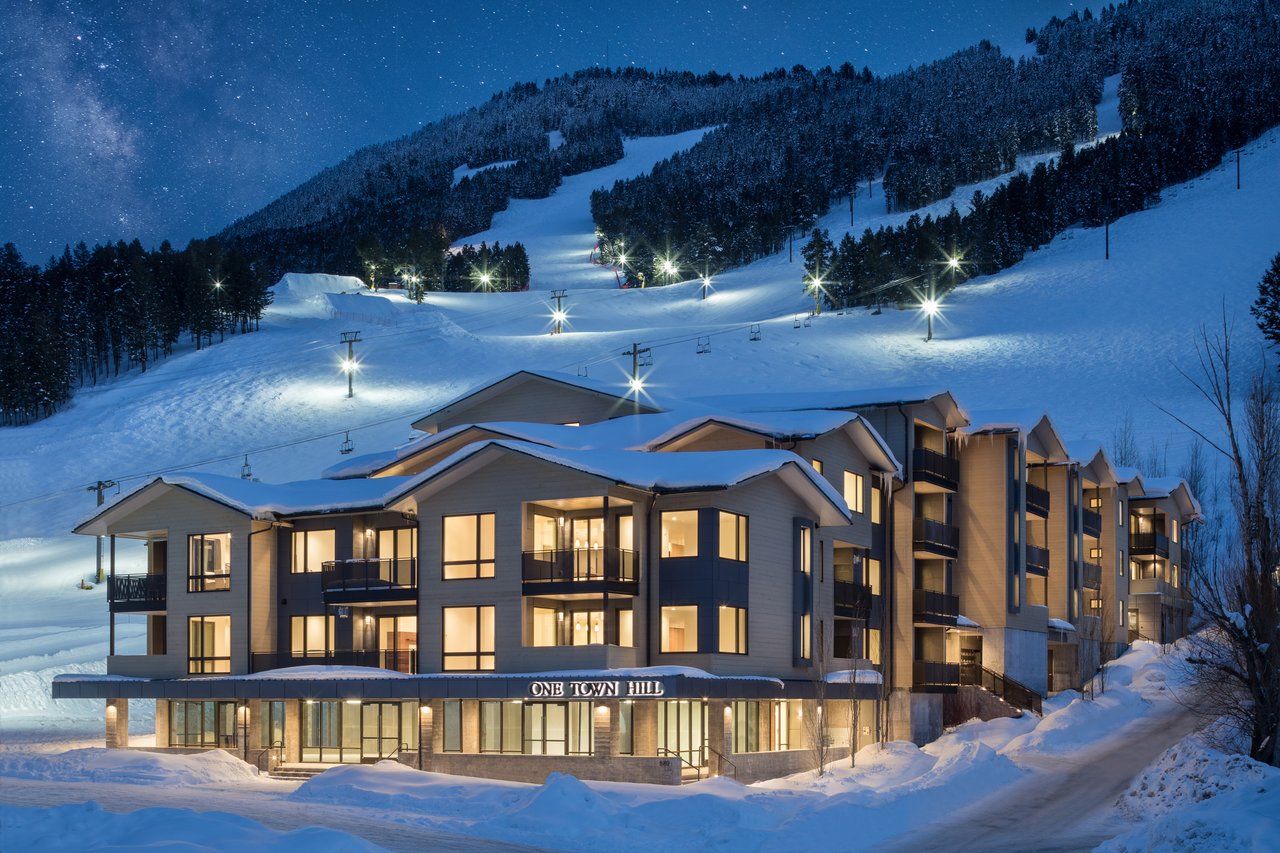
Picture two condos in the same Teton Village complex, same floor, same square footage, sold within a year of each other. One owner rents it out thirty weekends a year and covers the mortgage. The other can't legally rent it for anything shorter than a month, no matter how much a ski week in January is worth to somebody flying in from Dallas. Neither buyer discovered the difference by looking at the listing sheet. Both discovered it in the county's parcel records, months after they'd already fallen for the view.
That gap is the thing worth understanding before you compare price per square foot in this market. Teton Village is small enough that everyone assumes the rules are the same everywhere inside it. They aren't. Teton County permits nightly rentals, meaning anything under 31 days, only within specific approved footprints: Teton Village Area I, which covers condominiums and single-family homes, and Area II, which covers condominiums and townhouses. The county spells this out plainly in its own short-term rental guidance, and it applies to Teton Village as tightly as it applies anywhere else in the valley. Outside those approved zones, a residential unit can only be leased for 31 days or longer, full stop.
There's a narrower wrinkle on top of that. Certain buildings that were permitted before September 14, 2004 as a single-family dwelling, duplex, or townhouse can still carry transient lodging rights even if they don't sit inside the current Area I or Area II lines. That grandfather clause means two structures that look similar from the street, and were built in roughly the same era, can have completely different legal rental status depending on the paperwork filed decades ago. Nobody selling you a unit is required to lead with this. You have to ask.
Village Governance Doesn't Stop at the County Line
Clearing the county hurdle doesn't finish the job. Teton Village layers its own governance on top of Teton County's zoning, and that layer is where a lot of buyers get surprised after closing rather than before. Five special districts and the Teton Village Architectural Committee administer restrictive covenants, design standards, and use rules that reach into rental operations, remodels, and even guest access. A building can sit squarely inside an approved county zone and still have an HOA that prohibits nightly rentals outright, or that forces every owner into a single pooled rental program with terms the owner never negotiated individually.
The Teton Village Water and Sewer District, which also serves adjacent enclaves like Granite Ridge and Shooting Star, adds another layer of infrastructure oversight that shapes what an owner can build or add. And the Teton Village Association's parking framework, built around a master plan that intentionally capped on-site parking in favor of transit and park-and-ride lots like Stilson, means guest arrival logistics for a rental unit are governed by rules that have nothing to do with the county's zoning map at all.
None of this shows up as a line item on a comparable sales sheet. It shows up in the CC&Rs, the bylaws, and the rental-program agreement, which is why those three documents matter more here than almost anywhere else in the valley.
What the Numbers Actually Tell You, and What They Don't
The headline stats out of Teton Village this year make the point better than any warning could. As of May 2026, the median sale price across all Teton Village property types had dropped nearly half year over year, a swing that has nothing to do with the neighborhood cooling off and everything to do with how few transactions close here in any given stretch. When the sample is this thin, whether one or two ultra-luxury estates happen to close in a given month can swing the median by tens of percentage points. Condos alone told a steadier story: as of June 2026, they were listing between roughly $640,000 and $11.5 million, with condos typically spending 114 days on the market before selling.
That spread is the whole point. A number like "median condo price" is a commodity fact. It tells you nothing about which side of the Area I and Area II line a specific unit sits on, whether its HOA permits the rental program you're counting on, or whether the building would qualify for conventional financing at all. Ownership economics here split less by finish level and more by these legal and governance variables, which is why two units with nearly identical square footage can carry very different costs to own.
| Ownership type | Typical annual carrying cost | Rental flexibility | Financing path |
|---|---|---|---|
| Traditional condo | HOA dues vary widely by project and service level | Depends entirely on parcel zoning and HOA rules | Standard, if the project is warrantable |
| Condo-hotel / hotel-condominium | Dues commonly top $20,000 a year to fund staffing, housekeeping, and amenities | Often built around a managed rental program | Frequently non-warrantable, requiring portfolio or specialty lending |
| Townhome | Dues typically land in the mid five figures annually | Building by building, confirm parcel eligibility | Usually conventional |
| Single-family home | Lower or no HOA dues, but full direct cost of insurance, snow removal, and repairs | Depends on Area I zoning and any grandfathered status | Usually conventional |
What Just Reset the Comparison Set
If you're weighing a condo-hotel purchase in Teton Village right now, the comparison set changed this summer. Faraway Jackson Hole opened in July 2026 at the base of Jackson Hole Mountain Resort, on the site of the former Snake River Lodge & Spa. The redesigned property, developed by Blue Flag Capital and Bain Capital Real Estate and operated by Collared Martin Hospitality, now runs roughly 90 guest rooms and suites alongside about 51 residences, with an all-day restaurant called Sure Hand anchoring the lobby. It sits about a minute's walk from the tram terminal, which puts it in direct comparison with established condo-hotel product like Hotel Terra and Caldera House, and with the branded residence-club model at the Four Seasons.
That matters for anyone comparing a hotel-affiliated purchase against a private-club structure like the Hoback Club or a straightforward deeded condo. A new, design-forward inventory of managed residences just entered the market, and it will pull some buyers who might otherwise have looked at an older condo-hotel building with a dated rental program. If you're underwriting a purchase against expected rental performance, the arrival of fresh competing inventory a short walk from the lifts is not a footnote. It's a variable in your own building's future occupancy.
The Documents That Actually Answer the Question
Before you model rental income or compare one Teton Village property to another on price alone, there's a specific set of paper that tells you more than any listing description will:
- Written confirmation from Teton County Planning and Building that the exact parcel sits within an approved Area I or Area II boundary, or qualifies under the pre-2004 grandfather provision
- The CC&Rs, bylaws, and any rental-program agreement, reviewed for pooling requirements, owner-use limits, and quiet hours or guest-access restrictions
- The HOA's current budget, reserve study, and any pending litigation, since thin reserves or an open dispute can push a building into non-warrantable financing territory
- Twelve to thirty-six months of documented rental performance if the unit has an operating history, rather than a projection built on comparable buildings
Ask for these before you fall for the view. In a market this constrained, the unit that photographs the same as its neighbor can carry a fundamentally different set of rights, and the only way to know which one you're buying is to read the paperwork the listing photos can't show you.
Frequently Asked Questions
Does being inside Teton Village automatically mean I can rent my unit nightly? No. Only parcels within the county's approved Area I or Area II boundaries, or those covered by the narrow pre-September 14, 2004 grandfather provision, carry that right, and HOA rules can still restrict it further even inside an approved zone.
Why do two similar condos in the same complex sometimes have different financing options? Lenders evaluate the condo project itself, not just the buyer. A building with thin reserves, high investor concentration, or pending litigation is often treated as non-warrantable, which pushes financing toward portfolio or specialty lenders regardless of the unit's own condition.
Does the arrival of a new property like Faraway Jackson Hole affect existing condo-hotel values? It expands the inventory of managed, branded residences a buyer can choose from, which is worth factoring into any rental projection built on an older building's historical performance.
Teton Village rewards buyers who read past the listing sheet. If you're weighing a purchase here and want a straight answer on what a specific parcel's zoning and HOA documents actually allow, Graham Faupel Mendenhall & Associates can walk you through the paperwork before you write an offer, not after.