Above the shop floor at Hoff's Bikesmith on West Broadway, a room is set aside for bicycles that will not see pavement again until spring. The shop's winter storage season runs November through April, so by the third week of November it is well underway. The patio chairs in town have usually gone much farther. Some are wrapped and cataloged in a warehouse in Driggs or Star Valley. Some of the cars that would normally sit in Jackson driveways are parked in an 11,000-square-foot building in Victor, Idaho.
Off-season storage in Jackson splits at the town's edge. Anything kept within about ten minutes of town comes back the same day. The bulkiest items go out to Victor, Driggs or Star Valley, and getting those back takes advance notice or a scheduled date. The Jackson Hole News&Guide described "a specific industry" that has gained prominence in Jackson over the past few years. It also reported that the business is spreading out of town as affordable storage space gets harder to find.
| What's stored | Who holds it | Where it sits | How fast it comes back |
|---|---|---|---|
| Bicycles, including cargo bikes | Hoff's Bikesmith | Second floor of the shop, 265 W Broadway | Same day |
| Off-season tires | Shervin's Auto and Tire Care | Climate-controlled building 10 minutes south of the storefront | Same day |
| Cars | Jackson Hole Car Club | 11,000-square-foot building in Victor, Idaho | 48 hours' notice |
| Outdoor furniture | Duffel Donkey | Storage sites in Star Valley and Driggs, with a Victor site under construction | A set return day, or within a week |
The Shortest Trip Is Upstairs on West Broadway
Hoff's has been in business in Jackson for 10 years. It started its winter storage and tuning service in 2022 because, as the News&Guide reported, a lot of Jackson residents wanted somewhere to keep their bikes over the winter. Manager Jerry Bilek told the News&Guide where the demand comes from:
"Everyone in Jackson's got your summer gear, your winter gear, and it was like, 'Where do you put it.' A lot of us live in small apartments, don't have garages or that sort of thing. Bikes, especially the electric cargo bikes, take up a lot of space."
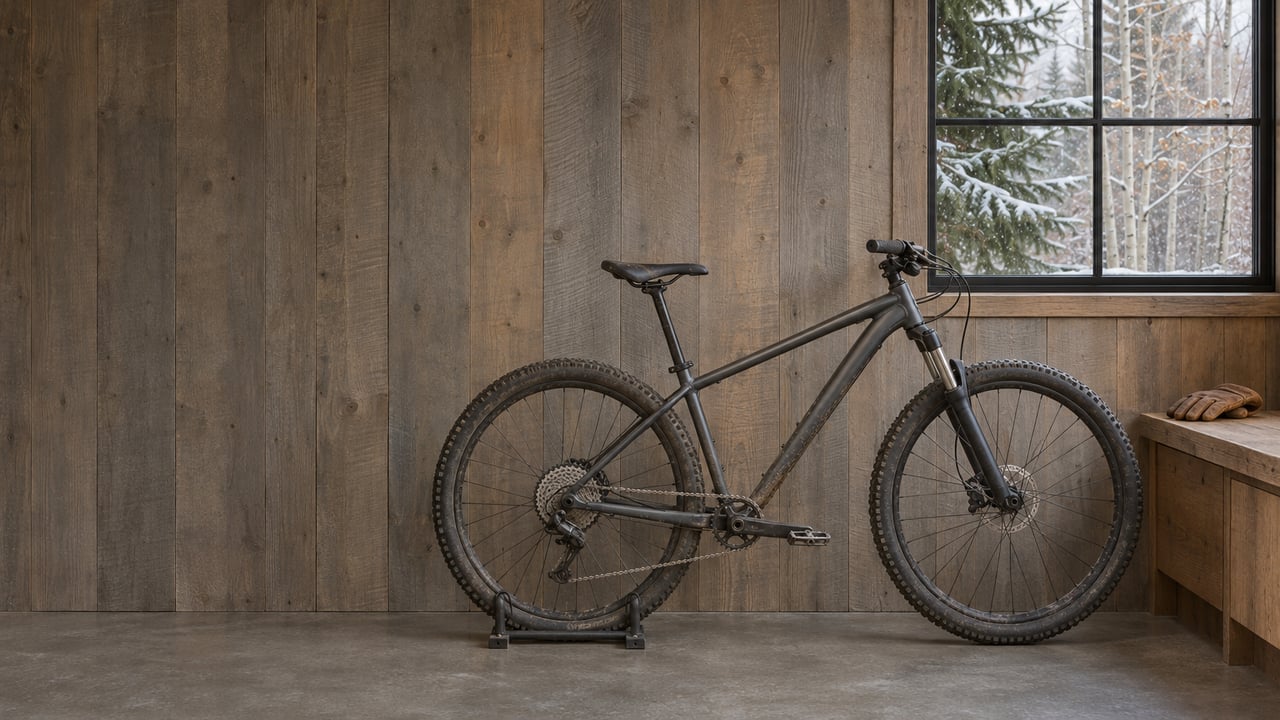
The bikes stay on the shop's second floor all winter. Each one gets a final tune in spring before its first ride of the year. Because the bikes never leave the building, an owner who gets a dry day in March can have theirs back the same day.
The prices on Hoff's service page make the choice easy to work out. Standard bikes are $30 a month from November through April. The other option is $250 upfront, which covers storage plus a Deluxe Tune listed at $80. Cargo-size bikes are $50 a month, or $370 for the storage-and-tune package. Six months at the monthly rate comes to $180 for a standard bike and $300 for a cargo bike. Add the $80 tune and you get $260 and $380. Each package is $10 less than paying monthly and adding the tune. So if the bike would get a spring tune anyway, the upfront package costs less.
The arrangement helps the shop too. "We sell some winter gear, but it gets pretty slow," Bilek told the News&Guide. "This gives us a little revenue and gives us something to do, fixing up bikes." A bike shop keeps bikes in town over the winter because it has the floor space and the mechanics are there in the slow months.
Ten Minutes South, for a Yearly Fee
Tires are the next step out. Shervin's Auto and Tire Care has its storefront at 400 US-89. According to the News&Guide, it keeps customers' off-season tires in a climate-controlled building 10 minutes south of that shop. Customers pay a yearly fee, leave their winter tires there over the summer and swap them back on when the snow comes. Like Hoff's, Shervin's can return a set the same day.
The service is new. When the News&Guide reported on it, Shervin's had offered it for just over a year in response to growing demand. Service writer Nils Huot explained the problem: "[Tires] take up a lot of space. It can be such a hassle if people don't have a proper-sized vehicle to even put their tires in ... it kind of seemed like a hot topic."
A set of tires takes more room than a bike and is harder to carry, so the storage sits outside the shop. It is still only ten minutes away, which is why the return time is the same as Hoff's.
The Cars Go to Victor
Cars are the first item that leaves the valley entirely. The Jackson Hole Car Club stores cars year-round at a facility in Victor, Idaho, which the News&Guide put at roughly 45 minutes from Jackson. Owner Pat Cunningham told the paper that roughly 60% of the cars in his 11,000-square-foot building belong to Jackson residents.
He was direct about why the building isn't closer, as he told the News&Guide:
"You know how limited commercial real estate is in Jackson, so you need to have an industrial area to have a business like this to make it financially viable."
The distance shows up in how cars come back. The club picks up and delivers to Wilson, Jackson and Jackson Hole Airport, and owners give 48 hours' notice to get a car back. Inside the building, the club arranges cars by how often they go out. Frequently used cars sit in the easiest spots so staff don't have to play what the News&Guide called "a game of Tetris" every time one leaves. A car stored in Victor is still easy to reach, but getting it back takes two days' planning.
Patio Furniture Comes Back on a Schedule
Outdoor furniture is the most spread out of all. Duffel Donkey is a moving and delivery company whose Jackson warehouse is at 960 W. Broadway. The News&Guide reported that it also has storage in Star Valley and Driggs, Idaho, and is building another facility in Victor.
Owners don't haul anything themselves. The company comes to the house, wraps and catalogs the furniture, and takes it to one of its facilities. Duffel Donkey has offered outdoor furniture storage for all 14 of its years in business. The News&Guide reported that it recently started promoting the service more as demand for storage space has grown. The company's services page describes temperature-controlled warehouses with short- and long-term storage, and discounted rates when long-term storage is paid in advance.
This is the slowest return on the list. Furniture usually comes back on a set day. If an owner needs it sooner, the company can return it within a week. A deck set that goes to Driggs or Star Valley in November comes back when the company schedules it, so an unexpectedly warm weekend in May may not be enough time to get it home.
Why the Gear Keeps Moving Out of Town
Bikes stay inside a Broadway storefront and come back the same day. Tires go ten minutes south and also come back the same day. Cars go about 45 minutes to Victor and need 48 hours' notice. Furniture is spread across Driggs and Star Valley and comes back on a set day or within a week. Within about ten minutes of town, return is same day. Once storage is out of town, getting things back takes notice or a schedule.
The operators who stay in town do it by building up. The News&Guide noted that many of them use racks and lifts to fit as much gear as possible under one roof. Hoff's uses its second floor. When an item is too big for racks, Cunningham's point about scarce commercial real estate decides where it goes, and for cars and patio furniture that has meant Victor, Driggs and Star Valley.
The paper expects the trend to grow. As affordable storage space gets harder to find, it wrote, the surrounding areas are likely to see more off-season storage facilities. Duffel Donkey's Victor facility under construction is one example.
At Graham Faupel Mendenhall & Associates, we know that in this valley a garage bay, a dry workshop or a finished loft can matter as much as the view. If you own a property in town with that kind of space and want to know what it's worth, we're glad to talk confidentially. Request a confidential valuation and bespoke marketing plan.