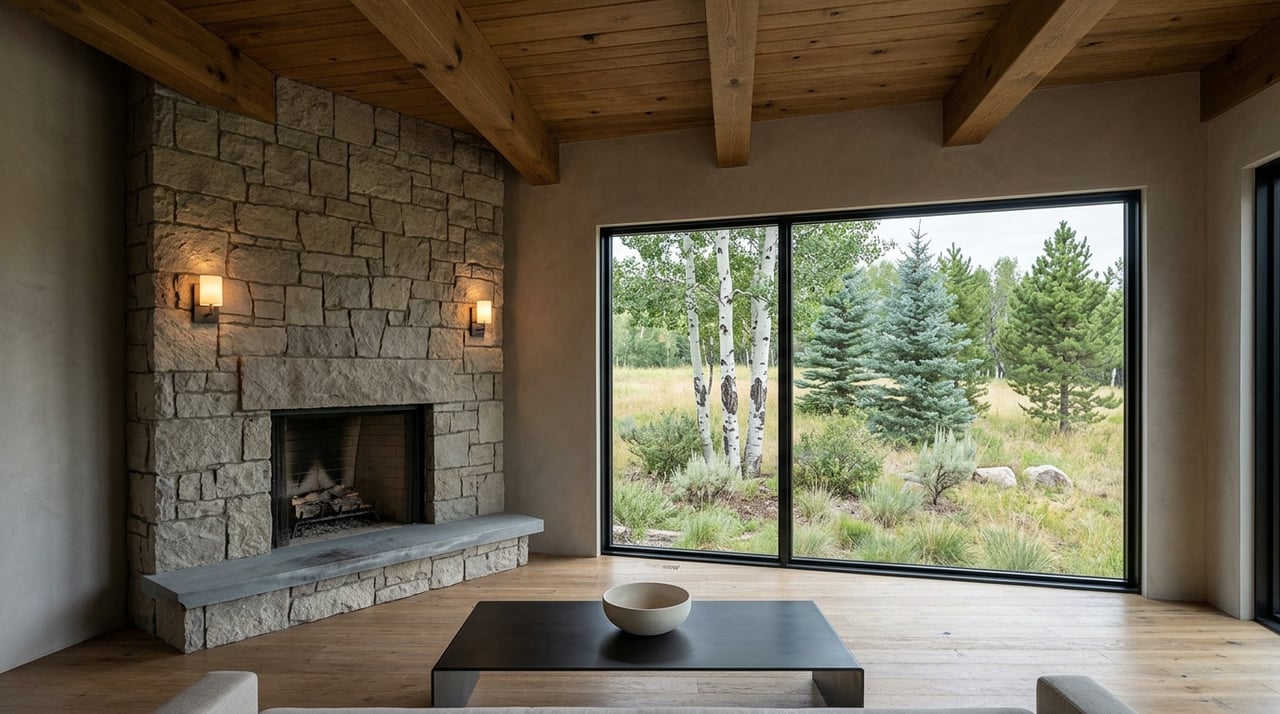
What does it really mean to live with the Tetons as your backyard north of Jackson? For many buyers, it is not just about a dramatic view. It is about daily proximity to Grand Teton National Park, a quieter pace than town, and a lifestyle shaped by seasons, stewardship, and planning. If you are considering this part of the valley, understanding how it lives day to day can help you see whether it fits your goals. Let’s dive in.
North of Jackson feels distinct
North of Jackson places you immediately beside Grand Teton National Park, which sits north of the town of Jackson and spans nearly 310,000 acres. The Craig Thomas Discovery & Visitor Center in Moose is about 12 miles north of Jackson, which gives this area an unusually close relationship to the park.
That proximity shapes the feel of the landscape and the rhythm of ownership. You are not choosing a typical residential setting. You are choosing a low-density environment where open land, mountain views, and access to protected public space play a central role in everyday life.
Teton County’s broader housing profile helps explain why this area often feels more retreat-like than urban. County figures show a population density of 5.8 people per square mile, a median owner-occupied home value of $1,633,900, and an owner-occupied housing rate of 58.3%.
A local housing needs assessment adds another layer. About 73% of housing units are occupied by resident households, while roughly 27% are second homes, short-term rentals, or vacant units in transition. Together, those numbers help explain why north-of-Jackson ownership often appeals to buyers seeking privacy, scenery, and long-term enjoyment.
Park access shapes daily life
One of the strongest draws north of Jackson is how easily the park can become part of your routine. Instead of treating Grand Teton National Park as a day trip, you experience it as a nearby landscape that influences mornings, weekends, guest visits, and seasonal habits.
That said, close access does not always mean effortless access. In this part of the valley, timing matters. Parking, weather, and road conditions can all affect how smoothly a simple outing comes together.
Trailheads are part of the lifestyle
Several major trailheads help define the area’s appeal. Taggart Lake Trailhead sits off Teton Park Road about 3.5 miles northwest of Moose Junction, and the easy Taggart Lake hike is a 3.0-mile round trip. The trailhead parking lot has 59 spaces.
Jenny Lake Trailhead opens the door to a wide range of hikes, including the Jenny Lake Loop, Hidden Falls, Inspiration Point, and routes into Cascade Canyon. It is one of the park’s marquee access points, but parking is limited and can spill onto the road during summer.
Granite Canyon Trailhead, about one mile north of the Granite Entrance Station on Moose-Wilson Road, provides access to the Valley Trail and the Teton Crest Trail. Its lot is small, and the National Park Service advises arriving early.
For many owners, this is part of the appeal rather than a drawback. Life north of Jackson rewards people who value early starts, shoulder-season calm, and a more intentional pace.
Winter changes the map
Seasonality is a real part of living here. Teton Park Road closes from November 1 to April 30 between Taggart Lake Trailhead and Signal Mountain Lodge. Moose-Wilson Road closes from November 1 until mid-May, depending on conditions.
In winter, many main park roads are snow-covered and icy. That means the landscape stays stunning, but your access patterns shift. Daily movement can depend more on weather, road status, and preparation than it would in a more conventional town setting.
The Snake River adds another layer
North-of-Jackson living is not only about peaks and trails. The Snake River corridor is another defining part of the setting, bringing together recreation, open space, and a strong sense of land awareness.
Teton County describes the Snake River corridor in Jackson Hole as stretching roughly 33 miles from Moose to Hoback, between Grand Teton National Park and Bridger-Teton National Forest. It supports boating, fishing, and riverside recreation, with views of both the Teton and Gros Ventre ranges.
This makes the area feel expansive in more than one direction. You have mountain access, but you also have a river system that adds movement, texture, and another way to experience the valley.
River access is public, but land-aware
Teton County maintains public boat ramps at Wilson and South Park. The summer season for those ramps runs from May 1 through October 31, weather permitting. Wilson is off Moose-Wilson Road next to R Park in Wilson, while South Park is at 6746 Henrys Road in Jackson.
The county’s Snake River map is especially useful because it shows access points, public lands, hazards, flow data, weather forecasts, and recreational easement information. The county notes that the map was created in part to help boaters and landowners understand where private and public lands change along the river.
That detail matters if you are drawn to river recreation. It reinforces that living here is tied not only to beauty and access, but also to stewardship and respect for how land is used.
Airport access is unusually convenient
Few mountain markets offer the same kind of arrival experience as Jackson Hole. Jackson Hole Airport sits inside Grand Teton National Park, making it the only commercial airport within a national park in the country. It is also the busiest airport in Wyoming.
For owners, that location can make travel and guest arrivals feel remarkably direct. You can move from runway to valley life quickly, which is especially meaningful for second-home ownership and multigenerational use.
Still, convenience comes with the same seasonal rhythm that defines the rest of the area. The airport may make arrival easy, but road conditions, trailhead parking, and park access still shape how a visit unfolds once you are here.
Hosting looks different here
If you plan to welcome family and friends, north-of-Jackson ownership has a distinct rhythm. Guests often arrive with big expectations for park days, iconic views, and time outdoors. Delivering that experience is very possible, but it usually goes best with a bit of planning.
Jenny Lake parking often fills in summer. Taggart Lake has a 59-space lot. Seasonal closures and road schedules also affect how easily you can reach certain parts of the park.
That does not make the lifestyle less appealing. It simply means that hosting here tends to work best when plans are thoughtful and flexible. In return, your guests experience a setting that feels immersive, memorable, and deeply connected to place.
Year-round activity remains strong
Although winter changes access, it does not stop active routines. Teton County reports 62.4 miles of pathways in Jackson Hole, including 15.4 miles in Grand Teton National Park. The county also reports that 26 miles are cleared in winter and that 68.5 miles of trails and pathways are groomed weekly during the winter season.
Those numbers help show why owners can build a four-season lifestyle here. Activity does not disappear with snow. It simply shifts in form, route, and timing.
For buyers comparing north-of-Jackson ownership with more urban or resort-centered markets, this is an important distinction. The experience is active and accessible year-round, but it is guided by conditions rather than convenience alone.
Why buyers are drawn north
The north-of-Jackson setting aligns naturally with second-home and legacy ownership. A local housing needs assessment notes that Teton County has long attracted wealthier homeowners and that most homes sold were purchased by new resident owners or second-home owners.
Paired with low countywide density and high housing values, that pattern helps explain the appeal. Buyers are often drawn to the combination of privacy, scenery, and long-term use potential, especially when they want a home that serves as both retreat and gathering place.
This is also why the area tends to resonate with those who think in decades rather than seasons. Living north of Jackson is often less about speed and more about permanence, setting, and the quality of everyday experience.
What to keep in mind
If you are considering a property north of Jackson, it helps to look beyond the view and ask how you want to live.
Here are a few practical questions worth considering:
- How important is immediate park access to your daily routine?
- Are you comfortable planning around seasonal road changes and summer parking demand?
- Do you want a setting that feels quieter and more private than town?
- Will you use the home as a primary residence, a second home, or a long-term legacy holding?
- How often will guests visit, and what kind of access and activity will matter most to them?
The answers can clarify whether north-of-Jackson ownership fits your version of mountain living. For the right buyer, it offers a rare combination of proximity, privacy, and enduring connection to the landscape.
If you are exploring a purchase or considering the future of a property in this part of the valley, Graham Faupel Mendenhall & Associates can help you evaluate the opportunity with local perspective, discretion, and a long view.
FAQs
How close is north of Jackson to Grand Teton National Park?
- Moose and the main park visitor center are about 12 miles north of Jackson, and the area sits immediately beside Grand Teton National Park.
What is everyday recreation like north of Jackson?
- You have close access to major trailheads such as Taggart Lake, Jenny Lake, and Granite Canyon, along with pathways, river recreation, and year-round outdoor activity shaped by season and conditions.
What changes in winter north of Jackson?
- Winter brings road closures, icy conditions, and reduced vehicle access in some areas, including seasonal closures on Teton Park Road and Moose-Wilson Road.
What is Snake River access like near Jackson?
- Public access includes county boat ramps at Wilson and South Park during the summer season, and river use is best approached with attention to public and private land boundaries.
Why does north of Jackson appeal to second-home buyers?
- The area combines low-density surroundings, high-value housing, strong access to scenery and recreation, and a setting that supports privacy and long-term enjoyment.
How does airport access affect life north of Jackson?
- Jackson Hole Airport is inside Grand Teton National Park, which makes travel and guest arrivals unusually direct while still leaving daily plans influenced by season, weather, and park access conditions.