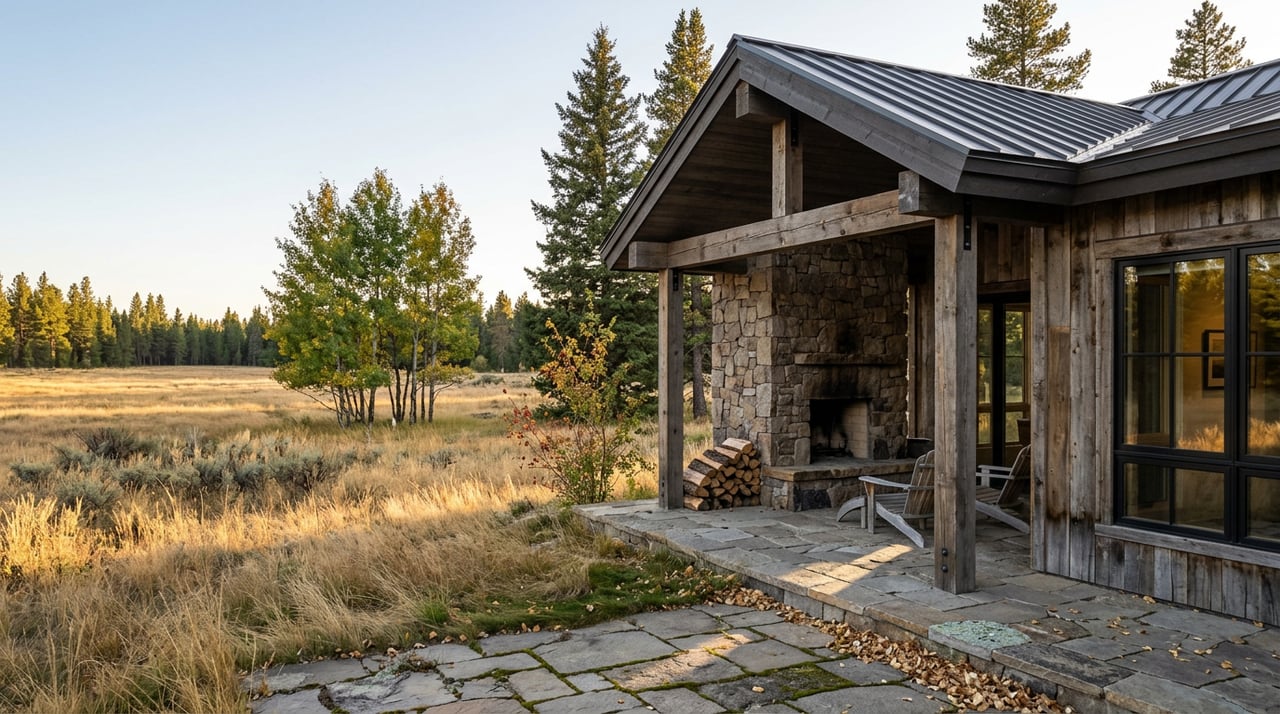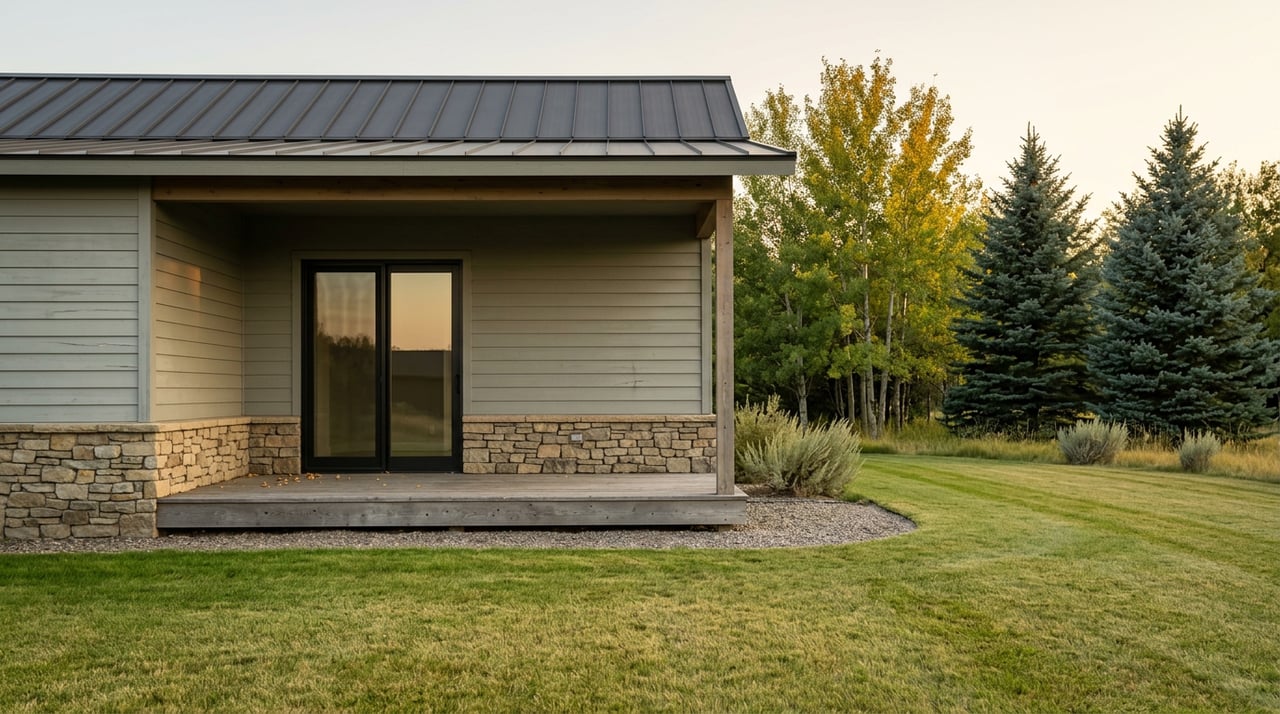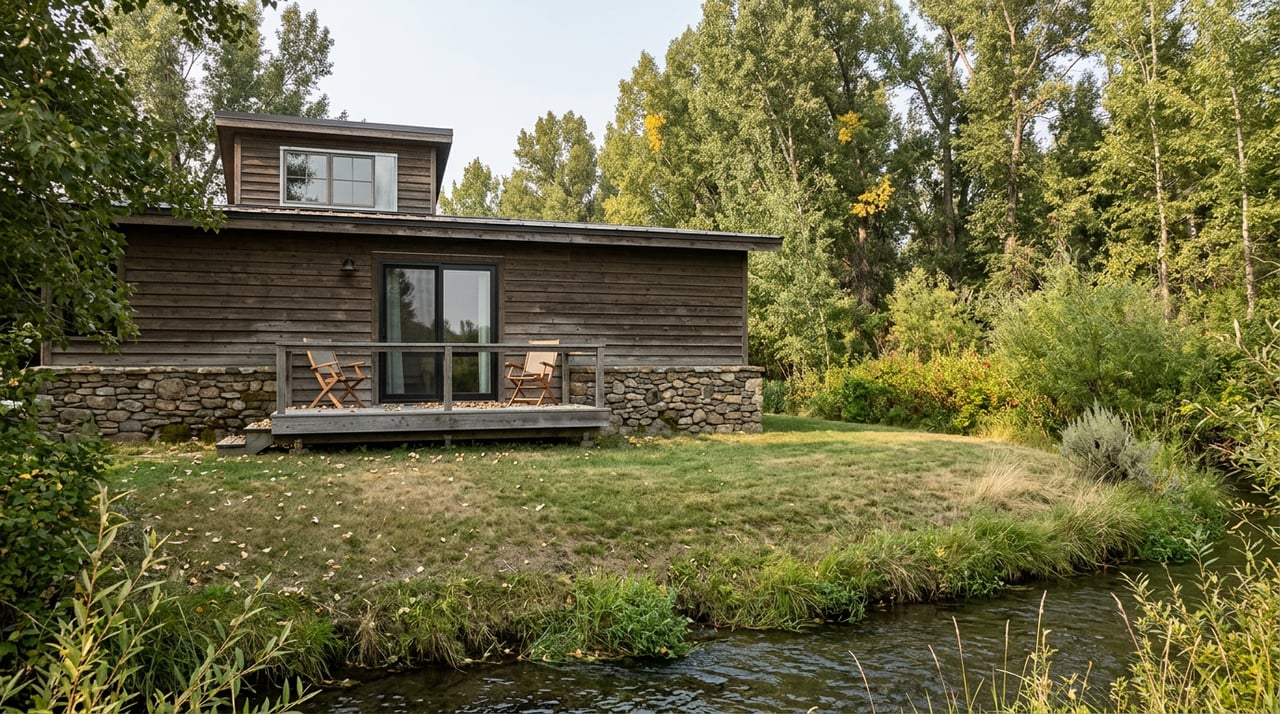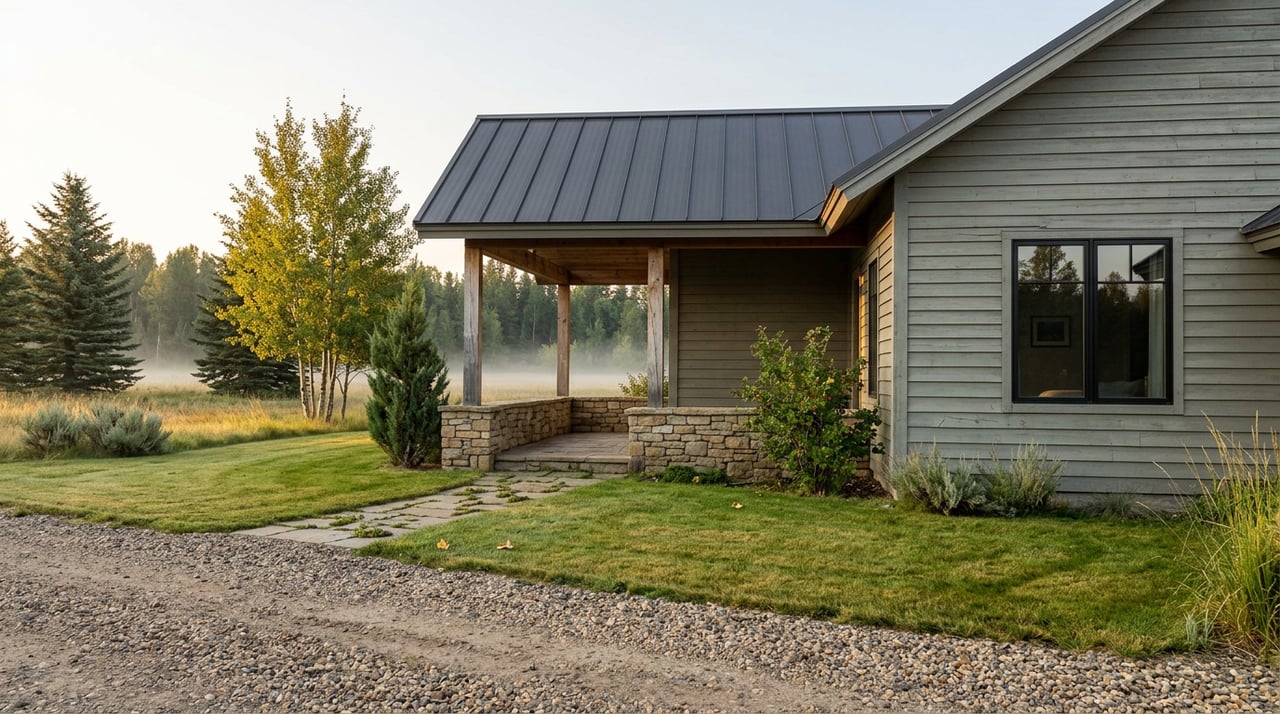
In 1978, when Floyd King, Jerry Wilson, and Chuck Luton carved 360 lots out of the old Brown Ranch along Flat Creek, they priced the first ones at $17,000 and figured the ceiling might reach $30,000 someday. That subdivision became Rafter J, and its current listings run past $2.7 million. The developers weren't bad at math. They simply had no way to price a scarcity that hadn't happened yet.
That history matters today because South Park is, for the first time in nearly three decades, offering buyers a genuine choice again. Rafter J and Melody Ranch still hold the valley's largest concentration of year-round, primary-residence households south of Town Square, and they still trade almost entirely as finished product in a footprint that hasn't grown since the Reagan administration. But a new subdivision called Porter Ranch has started selling raw lots a few miles down South Park Loop Road, and the choice between a finished home in an established neighborhood and a blank lot in a brand-new one is not really a choice about which place is nicer. It's a choice about which kind of risk you'd rather carry.
Two Neighborhoods, One Fixed Footprint
Rafter J and Melody Ranch get lumped together in most conversations about South Park, and for good reason. Both sit a few miles south of Town Square, both feed the same elementary boundary split, with Colter Elementary serving the west side of Highway 89 and the dual-immersion Munger Mountain Elementary serving the south valley, and both trade fast, often by word of mouth before a sign goes in a yard.
But the two neighborhoods were built on opposite bets about density. Rafter J's founding trio set aside roughly 60 percent of their 600 acres as open space and clustered the rest into quarter- to half-acre homesites, which is why Flat Creek and shared trails run through nearly every block. Melody Ranch, platted later a couple of miles further south, went further still, preserving close to 70 percent of its land as open space in exchange for the density needed to build a trout pond, parks, and playgrounds around it. Different math, same outcome: neither neighborhood can add another lot, and neither one is going to.
That fixed footprint is exactly what current listings reflect. Six homes are on the market in Rafter J as of this writing, ranging from $1,395,000 for a two-bedroom, two-bath home at 1,248 square feet to $2,795,000 for a three-bedroom, four-bath home at nearly 2,944 square feet. Melody Ranch, built around the same "opposite trade" of open space for density, trades in that same attainable band by local accounts. You are not buying land value in either neighborhood. You are buying a finished house, a known layout, and a piece of a community that has had four decades to settle into itself.
The New Subdivision Down the Road
Porter Ranch is a different animal entirely. It sits on land that was part of the Jackson Hole Hereford Ranch, one of the valley's old cattle operations, and the Gill family platted 79 lots on 26 acres in its southwest corner. As of April 2026, three homes had gone up and 62 of the 79 lots remained for sale, priced between $700,000 and $1.2 million, sold through the family's development entity, JHHR Development II LLC.
The pitch is straightforward: paved streets, sidewalks already in, and utilities run to the lot line, including Town of Jackson water and sewer, Lower Valley Energy for power and gas, and both Spectrum and SilverStar Communications for cable and fiber. You're not fighting a well permit or a septic design. You're buying a platted, serviced homesite in a subdivision Jackson Hole Sotheby's broker Brett McPeak has called the first genuinely comparable neighborhood to come along since Melody Ranch itself.
"I'd argue the last comparable neighborhood was Melody Ranch."
That comparison is doing real work. It tells you Porter Ranch is meant to be read as the next Rafter J or Melody Ranch, not a luxury enclave. But it's also a warning about what you're actually buying: dirt, not a finished house.
Why Cheaper Land Doesn't Mean a Cheaper House
Here is the part that gets lost in the excitement of a new subdivision. A $700,000 lot in Porter Ranch looks like a discount against a $1.4 million finished home in Rafter J, but that comparison only works if you stop counting before the house gets built.
One of the general contractors working in Porter Ranch, a builder named Wilson who has done most of his previous work around Pinedale, put the gap in blunt terms: for roughly what it costs to build 20 homes in Sublette County, he can build four or five in Jackson Hole. That is not a small premium. It is a multiple, and it applies whether you're building in Porter Ranch, Rafter J, or anywhere else in Teton County. A buyer who pencils out $700,000 for land plus a modest per-square-foot estimate borrowed from a lower-cost market is going to be surprised by the actual bid.
None of this makes Porter Ranch a bad option. It means the real trade is not price, it's structure. A finished home in Rafter J or Melody Ranch comes with a conventional purchase, a known closing timeline, and a house you can walk through before you commit. A lot in Porter Ranch means a construction loan, a builder relationship, a design process, and a timeline measured in seasons rather than weeks, since construction here runs on a short window between spring thaw and the first hard freeze. You are trading price certainty for design control, and design control for time.
The Bigger Plan Next Door
There's one more piece of the Porter Ranch story that any buyer evaluating those meadow views should know. The 79-lot subdivision is only the southwest corner of a much larger parcel the Gill family controls along South Park Loop Road. County commissioners approved a zoning framework for the broader area back in 2024, and in a 4-1 vote in 2025 they approved a master site plan for the remaining acreage that could bring up to 685 new homes to the family's land, most of them deed-restricted for local workers. At a February 2026 hearing, the family's attorney told commissioners she believed 2026 would be the year the family delivered on the vision for that broader plan.
The Gills' neighbors in this arrangement, the Lockhart family, hold an adjacent parcel that could add still more density under the same zoning, for a combined potential of up to 1,437 homes across both properties' 222 acres, though the Lockharts have said publicly they intend to keep ranching their share for now. None of that changes what you're buying in Porter Ranch today. It does mean that buyers should expect construction activity and rising density on the land immediately north of the subdivision over the coming years, on a timeline that runs in phases rather than all at once.
Before You Write an Offer
A few things worth confirming on any specific address in this corridor, since the details shift lot by lot even within the same subdivision:
- Which elementary school boundary the address falls under. Colter and Munger Mountain serve opposite sides of Highway 89, and the line runs through, not around, this general area.
- Whether the property carries HOA design standards or deed restrictions specific to that block. Rafter J's owner-run HOA has managed its own trails and design rules since 1979, separate from the water and sewer district. Porter Ranch's design rules are lighter by comparison, according to builders working there, which is part of what keeps its construction costs down relative to more restrictive subdivisions.
- Whether you're financing a finished home or a construction project, since the two require entirely different loan products and different appraisal approaches in a market with thin comparable sales.
Frequently Asked Questions
Is Porter Ranch part of the affordable housing development planned for northern South Park? No. Porter Ranch is a separate, already-platted, unrestricted subdivision in the southwest corner of the Gill family's land. The larger deed-restricted development under review is a distinct project on the acreage north of it.
Do Rafter J and Melody Ranch use the same schools? Both feed into Teton County School District #1, but the elementary assignment splits along Highway 89, with Colter Elementary on one side and the dual-immersion Munger Mountain Elementary on the other. Confirm the boundary for any specific address before assuming.
South Park's family neighborhoods have never been a single market, even when they got treated like one. Rafter J and Melody Ranch sell certainty. Porter Ranch sells a blank page and a longer runway. Knowing which one you're actually buying, before you're three months into a construction loan, is the difference between a good decision and an expensive lesson.
If you're weighing a finished home against a new lot in South Park, or trying to time a purchase against what's coming next door, Graham Faupel Mendenhall & Associates can walk the specific parcels, pull the current comparables, and help you price the risk you'd actually be taking on. Request a confidential valuation and bespoke marketing plan to start the conversation.