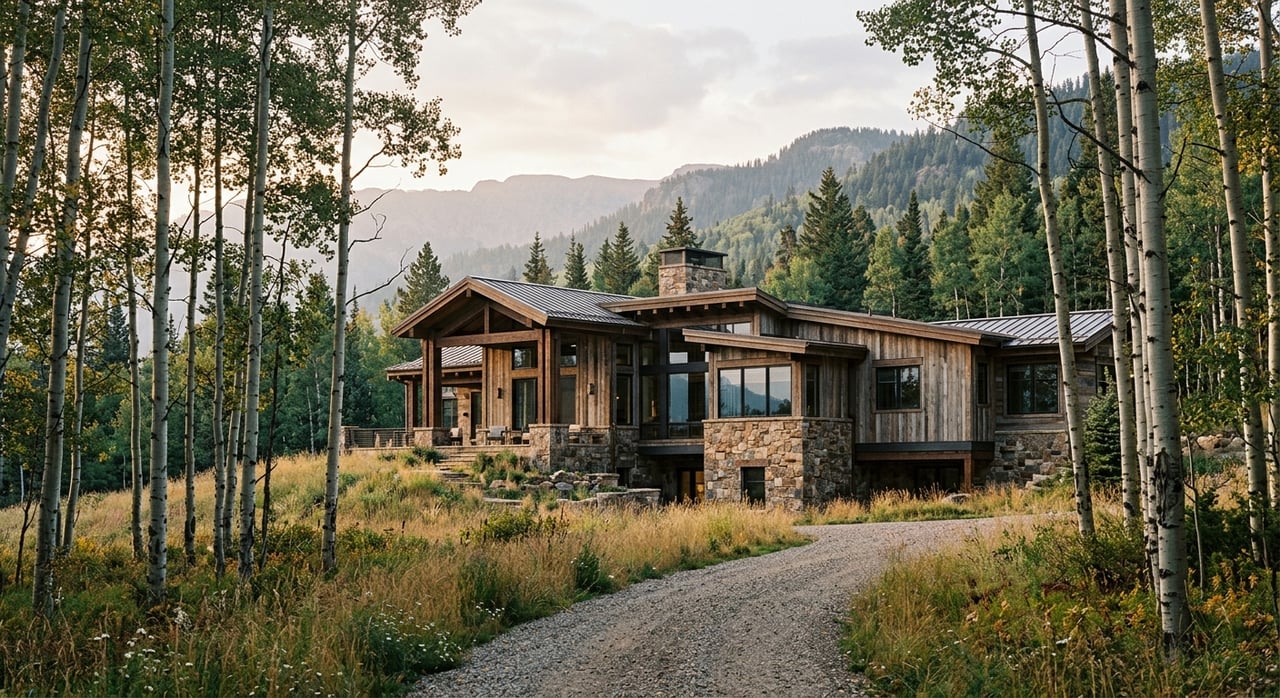
If you are searching for larger acreage homes west of Jackson, it helps to know that not every Westbank address offers the same kind of space. Some properties place you close to Wilson’s services and daily convenience, while others trade that access for deeper privacy, bigger land holdings, and a more rural setting. Understanding where those patterns show up can save you time and sharpen your search. Let’s dive in.
West of Jackson acreage at a glance
The first thing to know is that Wilson is not the valley’s main true-acreage district, even though it is often the starting point for buyers exploring the west side. Teton County planning documents describe Wilson, the Aspens, and Teton Village as interior nodes within the broader Westbank area, while much of the surrounding land is shaped by priorities such as wildlife habitat, riparian protection, scenic conservation, and rural or agricultural character.
That matters because when you say you want “larger acreage west of Jackson,” you are usually looking at one of three location types. Those are Wilson-area lots with some oversized parcels, access-rich corridor properties near Moose-Wilson Road and Teton Village, or more rural acreage in Game Creek, South Fall Creek, and the County Periphery.
Wilson offers convenience first
Wilson itself is best understood as a developed county node rather than a broad acreage zone. County planning describes it as an area within walking distance of the commercial core, with local convenience services, sewer, emergency services, recreation, transit, and other daily-use infrastructure.
The county also notes that new development in Wilson is generally intended to follow an existing town-style pattern, with lots roughly 50 by 150 feet and one or two dwelling units per lot. In practical terms, that means Wilson proper tends to appeal most to buyers who want proximity and ease, not necessarily ranch-scale land.
Wilson Meadows is a key exception
If you want more land while staying close to Wilson, Wilson Meadows stands out. Teton County describes it as a 75-lot development where market lots range from 0.25 acres to 2.6 acres.
For many buyers, that makes Wilson Meadows one of the clearest examples of larger lots near Wilson. It still does not represent the valley’s largest true-acreage inventory, but it can offer a useful middle ground between convenience and elbow room.
Moose-Wilson Road balances access and setting
The Moose-Wilson Road corridor often attracts buyers who want quick access to Teton Village, recreation nodes, and the broader west side of the valley. It sits in a location that feels connected, but county planning still places strong emphasis on conservation across the Westbank.
The county notes that many platted lots already exist along Highway 390 and that further subdivision is generally considered inappropriate in this area. That helps explain why buyers often see a mix of established homesites, access advantages, and land-use sensitivity rather than a large supply of newly created acreage offerings.
Lot sizes here are often moderate
A useful example is the Millward development on Moose-Wilson Road. County documents describe it as an 8.3-acre site with duplexes and single-family homes on lots ranging from 0.38 to 0.74 acres.
That is important because it shows the typical scale many buyers will encounter in this corridor. While the setting may feel spacious and highly desirable, it is often better described as access-rich and service-oriented than as a source of expansive rural acreage.
Game Creek and South Fall Creek feel more rural
If your goal is true breathing room, the conversation usually moves south and outward. The Hog Island and Game Creek district is identified by the county as a rural district that includes the Snake River, Game Creek, Porcupine Creek, Horse Creek, and Munger Mountain.
Planning guidance says development in this area should generally be minimized. Even so, Hog Island is noted as one place where development more dense than rural and less dense than town is considered appropriate, which gives buyers an idea of how this district can bridge the gap between in-town living and deeper rural land.
Hog Island is not the largest-lot benchmark
The county’s Hog Island subdivision includes single-family homes on lots ranging from 0.704 to 0.889 acres. Those lot sizes may still appeal to buyers seeking more separation and a less concentrated setting, but they are not the largest acreage product west of Jackson.
Instead, this area is often a transition zone. You begin to feel more of the rural character, but the biggest land opportunities generally concentrate farther out.
County Periphery is where true acreage concentrates
For buyers focused on meaningful land holdings, the County Periphery deserves close attention. County documents describe this area, especially the Large Outlying Parcels and Game Creek or South Fall Creek subareas, as a rural zone made up of large lots and isolated smaller subdivisions surrounded by public land.
The planning priority here is preservation of wildlife habitat, migration corridors, and scenic vistas. As a result, these properties often appeal to buyers who value space, privacy, and a stronger sense of separation from the valley’s service nodes.
Redtop Meadows illustrates the setting
Redtop Meadows is a helpful example of what true outlying acreage can look like in this part of Teton County. County materials describe it as a remote inholding of private land, primarily residential or agricultural, surrounded by Bridger-Teton National Forest and located about 10.5 miles south of downtown Wilson on South Fall Creek Road.
That description captures the core tradeoff many acreage buyers are making. You gain a more remote, land-first environment, but you are also choosing a property that sits farther from Wilson’s everyday convenience and service concentration.
Access and services shape the decision
When buyers compare larger acreage homes west of Jackson, the choice is often less about a single neighborhood name and more about how you want to balance privacy with access. Parcels closer to Wilson and the main travel corridors tend to offer stronger day-to-day convenience, while more remote holdings can deliver a quieter and more expansive setting.
Emergency service patterns help illustrate that difference. According to the county’s EMS information for 2025 90th-percentile response times, North Wilson is 19.2 minutes, South Wilson and Fall Creek is 26.6 minutes, Game Creek is 19.3 minutes, and Teton Village is 18.3 minutes.
Those figures do not define value on their own, but they do show how service reach can vary across the west side. For many buyers, that becomes part of the larger conversation about location, comfort, and long-term suitability.
Teton Pass can be a meaningful factor
Transportation patterns also shape how buyers view west-of-Jackson acreage. WYDOT’s WY22 camera route places Wilson at milepost 6.9 and Teton Pass at milepost 11.2 on the same corridor.
If you use the pass regularly, that corridor can be a major convenience. If you do not, it still helps explain why some Wilson-area and west-side properties carry a different access profile than more remote parcels deeper into South Fall Creek or the County Periphery.
River and scenic land require extra care
Some buyers are especially drawn to parcels near the Snake River or other riparian areas because they can offer scenery, privacy, and a strong connection to the landscape. However, county planning documents make clear that these areas are also shaped by conservation priorities.
In practical terms, that means river-influenced land may be visually compelling, but it should not be assumed to be simple from a land-use perspective. The county treats many of these settings as sensitive, which is one reason local guidance matters when evaluating a property’s real potential.
Start by confirming the jurisdiction
Before you get too far into a property search, Teton County advises confirming whether a parcel is in unincorporated Teton County or within the Town of Jackson. The county notes that the two jurisdictions use different regulations, and its planning FAQ directs users to the county GIS map to verify boundaries.
That step is especially useful in the Wilson and Westbank area, where the shift from town-style lots to rural parcels can happen quickly. If you are comparing homes with land, knowing exactly which rules apply is an important first filter.
How to think about your acreage search
A simple way to frame your options is this: Wilson offers convenience with a few larger-lot opportunities, Moose-Wilson Road offers strong access with generally moderate lot sizes, and the Game Creek, South Fall Creek, and County Periphery areas are where true rural acreage becomes more common.
Your best fit depends on what matters most to you. If you want quicker access to services and recreation, staying closer to Wilson may make sense. If privacy, scale, and a more remote landholding are the priority, the search usually expands south and outward.
For buyers and sellers navigating larger acreage homes west of Jackson, nuance matters. The right strategy often comes from understanding not just where land exists, but how access, planning context, and long-term stewardship shape each opportunity. To explore acreage properties or discuss a discreet sale strategy, connect with Graham Faupel Mendenhall & Associates.
FAQs
Where are larger acreage homes west of Jackson most commonly found?
- Larger acreage homes west of Jackson are generally more likely to be found in Game Creek, South Fall Creek, and the County Periphery than in Wilson proper.
Is Wilson, Wyoming the main acreage area west of Jackson?
- No. Teton County planning describes Wilson primarily as a developed service node, with some larger lots nearby but not as the main true-acreage district.
What lot sizes can buyers expect near Wilson, Wyoming?
- Near Wilson, lot sizes can vary, but Wilson Meadows is one of the clearer examples of larger Wilson-adjacent lots, with market lots ranging from 0.25 to 2.6 acres.
Are Moose-Wilson Road properties considered large acreage homes?
- Some Moose-Wilson Road properties feel spacious, but county examples in that corridor often show moderate lot sizes rather than expansive rural acreage.
Why does location west of Jackson affect acreage value?
- Location affects how a property balances privacy, services, transportation access, and conservation context, which can shape how buyers evaluate its overall appeal.
What should buyers verify before purchasing acreage near Wilson?
- Buyers should first confirm whether the parcel is in unincorporated Teton County or within the Town of Jackson, because the two jurisdictions follow different regulations.